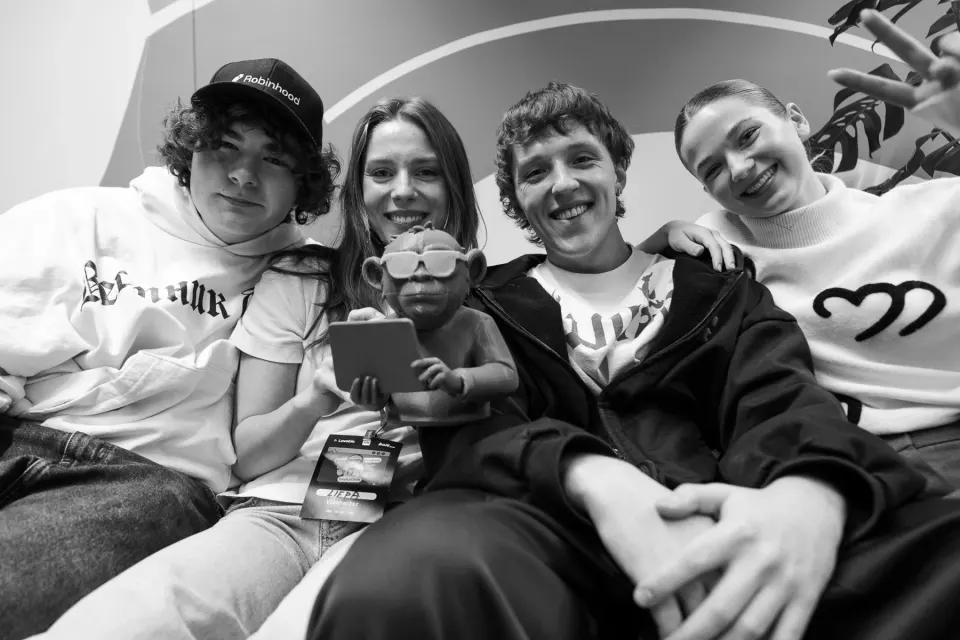
Goda Šmulkštytė did not win the five-day hackathon. Months later, she had spent almost all her savings on a flight to San Francisco to build a sleep-tech startup.
In between, she built and left a student networking app, tested another startup idea, found a co-founder through the hackathon's orbit, and turned an early sleep concept into a working prototype in two weeks.
Then came two major pivots. Neurex became Sonna. The scientific evidence weakened. The sleep mask stopped making sense. She and her co-founder chose separate paths. Goda kept building.
Now in San Francisco, she is still in the earliest stage of founding a company: speaking with users, testing ideas, and changing direction when the evidence demands it. The rollercoaster is not background detail. It is the work.
Through every turn, one thing has held: Goda wants to spend her life working in human biology, the brain, and technology that can improve how people feel and function. What she does not know yet is the exact company that will take her there.
Almost everything about the startup has changed. The mission underneath it has not.
The mission came before the startup
Goda did not discover human biology through a startup trend.
Her mother is a biology teacher, and Goda had been fascinated by the brain since she was around 16: neuroplasticity, behaviour, and whether the brain could be changed. When her grandmother was diagnosed with dementia, that curiosity became more urgent. Her brother's difficulty with sleep made the consequences immediate and personal.
She began reading research on deep sleep and the processes through which the brain clears waste. She studied existing products and questioned whether the options people already used were improving sleep quality or merely changing how they got through the night.
She could see herself working somewhere around human biology, the brain, or technology for the body. Sleep was becoming the clearest expression of that interest—but for years she treated the lack of a neuroscience degree as evidence that she was not qualified to build in the field.
A conversation with her brother helped break that loop.
“Do what you want to do. Do not let other people decide for you. In the worst case, you fail, but you will learn an incredible amount.”
— Goda's brother
She could teach herself, work with researchers, and bring in advisors. A founder did not need to personally hold every credential or every piece of knowledge the company would ever need.
What she still needed was momentum.
The hackathon that made her a builder again
By late November, Goda was burned out.
She was studying full-time, working part-time, taking her regular university classes, and completing a software engineering and AI course on top of them. A five-day hackathon made very little practical sense.
That was part of the appeal.
“I need to spice up my routine and do something different,” she remembers thinking. “I will make it work.”
— Goda
She was not chasing a trophy. She wanted to spend five days around people who were excited to build—and to prove to herself that she could choose something difficult and find a way through it.
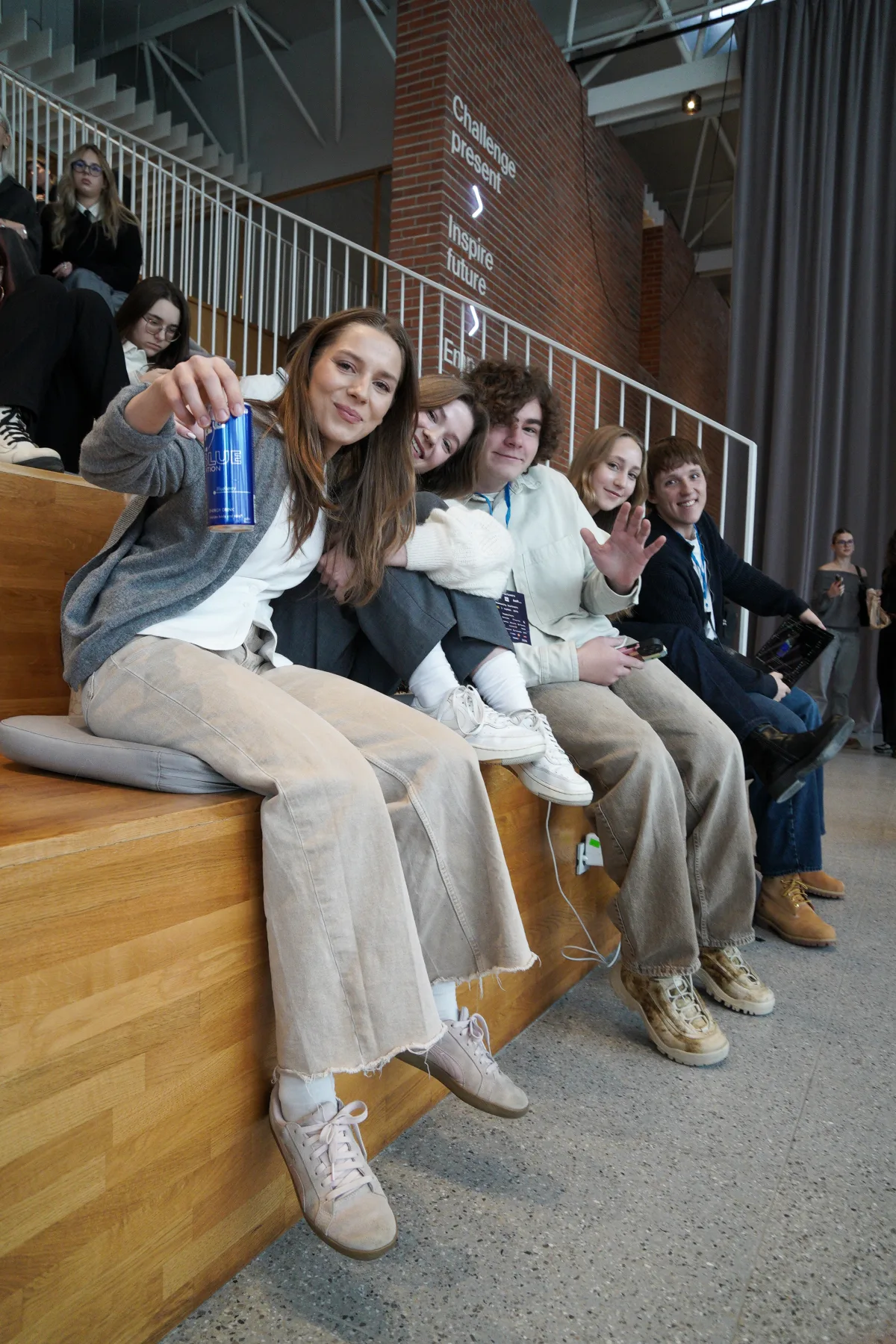
Her team built Icebreaker, a university networking app designed to make meeting new people less awkward. It removed profile pictures and swiping. Instead, students described their interests, activities, and availability; the product suggested people they might want to meet and generated conversation starters from their profiles.
Hundreds of students downloaded or tested it. People talked about it on social media. Friends began telling the team they could win. Their expectations rose with the attention.
Then they did not win.
“Immediately afterward, I was genuinely sad,” Goda says. But the disappointment lasted far less than what the experience unlocked.
“I stopped feeling like I had to finish learning something before I was allowed to start doing it. You learn where things actually count when you start building, testing, and putting yourself in situations where you have to figure things out.”
— Goda
The hackathon did not give her a winning product. It gave her a bias toward action.
Learning to leave good ideas behind
For a few weeks, the Icebreaker team tried to keep going. They held weekly meetings, distributed tasks, and improved the product from user feedback. But everyone was busy, ownership became uneven, and progress slowed.
More importantly, Goda could not see herself spending years on university networking. Icebreaker had users and potential. It was simply not her mission.
So she let the product go without letting go of building.
From December through February, she experimented. One project, Maveriq, used multiple AI agents to help founders evaluate startup ideas: the market, competitors, target users, comparable failures, and assumptions worth testing. High school students tried it through an entrepreneurship club and gave encouraging feedback.
Maveriq worked. It could have become useful. Goda still did not want to spend years on it.
That was an early founder lesson: a good idea is not automatically the right company for you. Each experiment was helping her separate “I can build this” from “I need to keep solving this.”
Meanwhile, the pull toward neuroscience and hardware kept getting stronger. Goda had tried to join Pulsetto, a Lithuanian neuroscience company, but there was no way to bring her on at the time. Her response was direct:
“If they do not want to hire me, I will build my own.”
— Goda
A co-founder, a shared direction, and a prototype in two weeks
Toward the end of February, Goda began spending time at a Vilnius hacker house, building early sleep hardware and deciding whether she was ready to commit to the problem seriously.
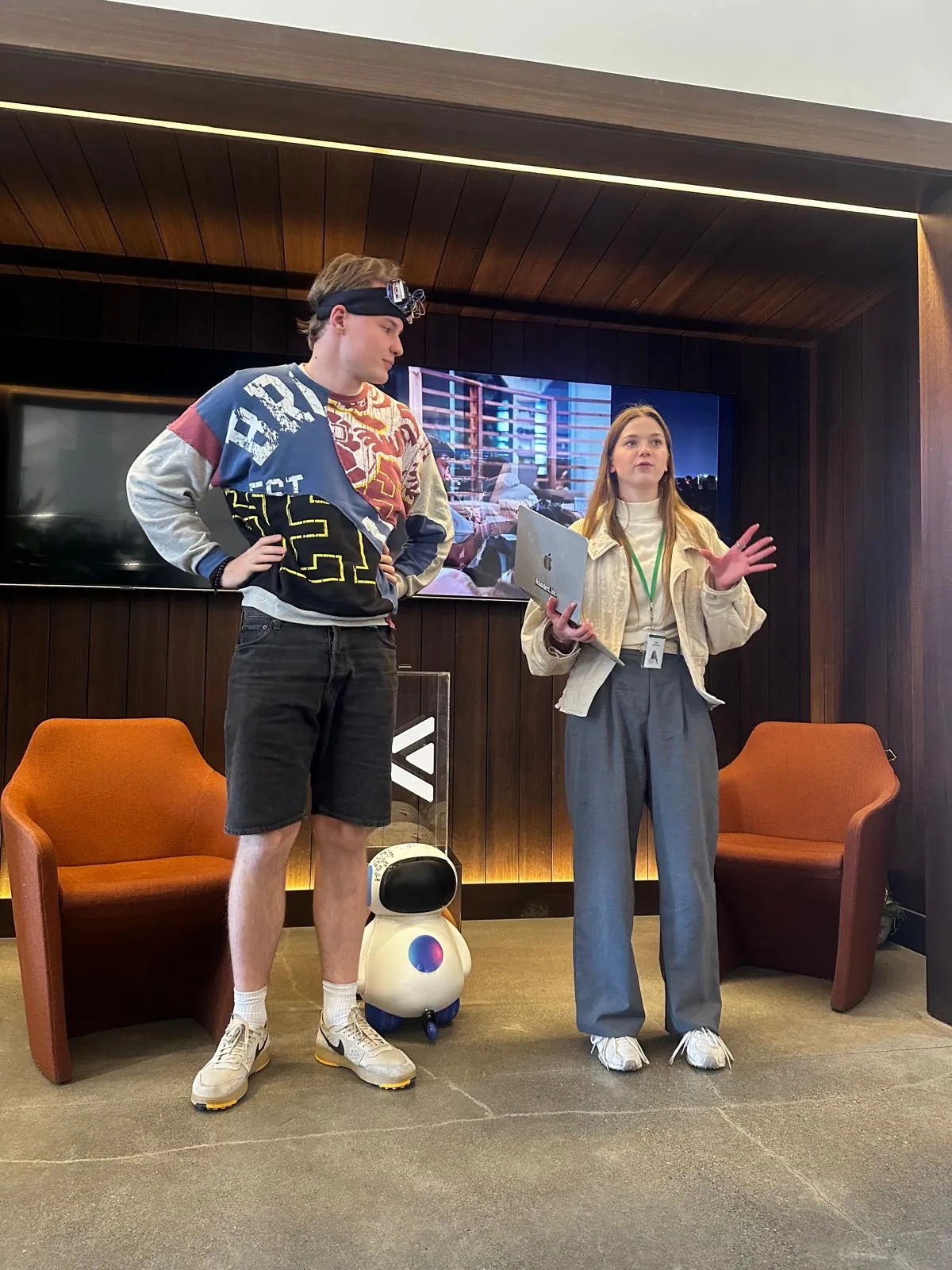
Aleksas Petravičius was there too. He had placed second at the same hackathon with Tailysis, a biometric collar that translated a dog's health signals into something an owner could understand. They had not built together at the event, but someone who knew both of them noticed that they were now exploring similar ideas in neuroscience and hardware.
“You two should talk,” the person told them.
They did. By the next day, they had decided to work together.
By mid-March they were building Neurex, a system that used precisely timed sound to try to deepen sleep. Roughly two weeks after joining forces, they had a working prototype. The ambition was not to make another tracker that explained sleep after it happened. They wanted hardware that could intervene while a person was still asleep.
It was the first product that sat squarely inside Goda's long-term direction. It was also only the first version of how that direction might become a company.
Three days to San Francisco
Once the prototype worked, Goda and Aleksas applied to programs that might get them to San Francisco.

The attraction was part dream, part logistics. San Francisco offered a dense network of people building ambitious technology, potential access to funding, and proximity to sleep clinics, researchers, and expertise they could not reach as easily from Lithuania.
Founders, Inc. accepted them—and gave them three days to arrive.
Goda packed her apartment, rearranged what university exams she could, accepted that the rest would become retakes, and spent almost all the savings from her part-time job on the trip.
“Once I got on the flight, it felt like I was taking the right step. I felt like I was finally pushing myself far outside my comfort zone and moving toward the kind of life I actually wanted.”
— Goda
The city gave her something she had rarely felt growing up in Marijampolė or even after moving to Vilnius: a place where the most ambitious version of herself did not need to be softened.
“It almost felt like all of the people who had been outsiders somewhere else had somehow ended up in the same city.”
— Goda
San Francisco made the feedback loop faster
The Founders, Inc. routine was not sightseeing and startup parties. It was breakfast, office, work, sleep, repeat. Saturdays and Sundays included. Goda and Aleksas were often among the first to arrive and the last to leave.
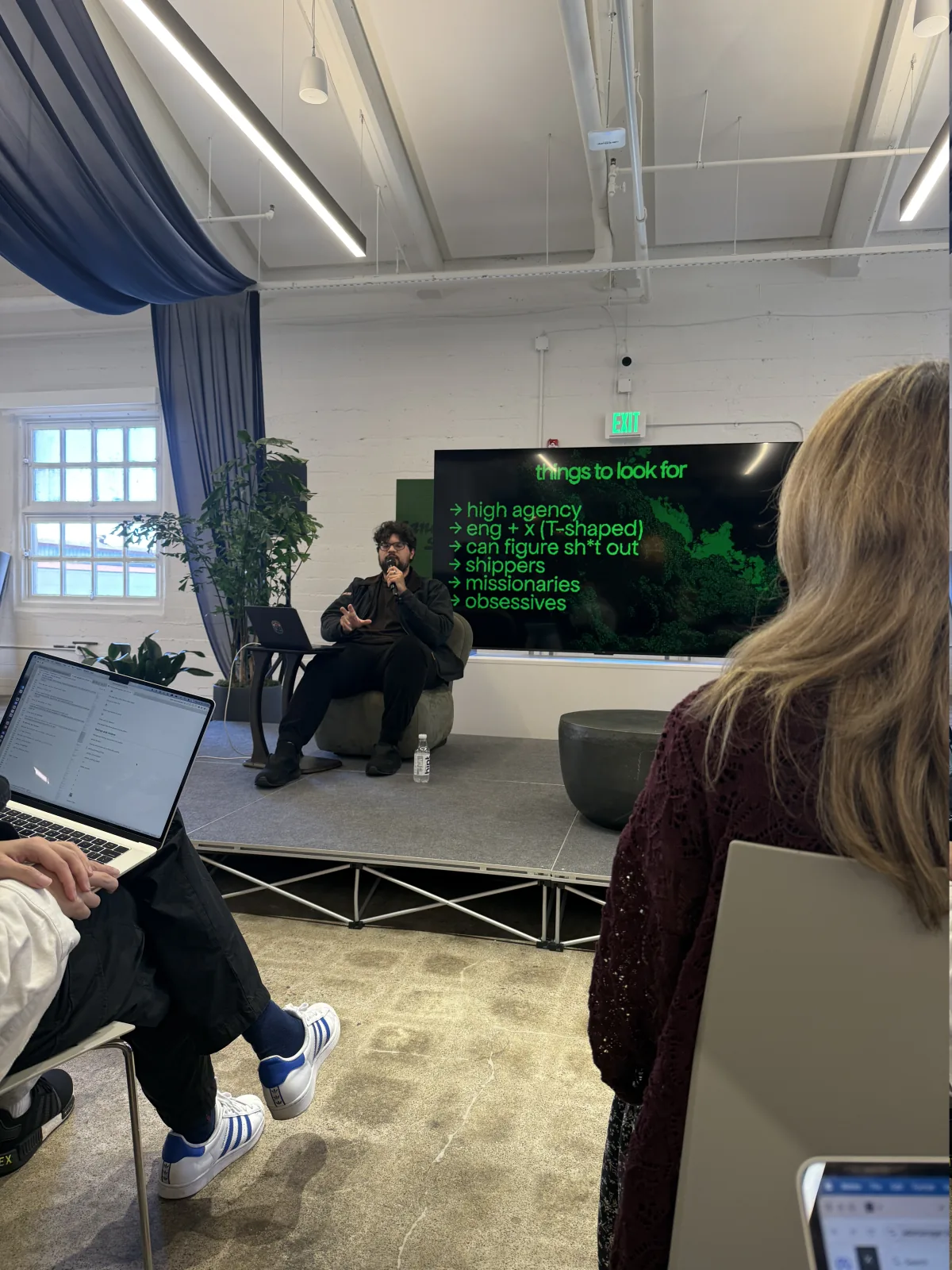
The biggest change was how quickly they turned feedback into another test. If someone found the device uncomfortable, they tried to understand why, changed it, and returned the next night with a new version. Weekly goals gained numbers: not “test more,” but test with 35 people; not “post more,” but publish 12 videos.
Goda also started building publicly before everything felt polished. The posts brought inbound interest from potential collaborators, investors, and researchers. Visibility created opportunities that private preparation never could.
Pivot one: from changing sleep to changing the wake-up
Neurex focused on actively stimulating deep sleep with sound. As Goda and Aleksas spoke with users and researchers, they began questioning whether the scientific evidence was strong enough for the consumer product they wanted to build.
They could have defended the original idea because they had already built it, moved countries for it, and spent months explaining it. Instead, they followed the evidence.
Around June, Neurex became Sonna: a sleep mask using light and audio to help people wake more gradually, ideally during a lighter and more wakeable stage of sleep. The goal was to reduce sleep inertia—that heavy, disorienting feeling immediately after waking.
The mission stayed inside human biology and sleep. The intervention changed completely.
Pivot two: from the sleep mask back to the question
Then Sonna's own tests began weakening its core assumptions.
Goda found barely any meaningful difference between timing the wake-up to a supposedly ideal sleep stage and using a fixed timer. The form factor introduced another problem: people remove sleep masks during the night without realizing it. If the mask came off, the sensing and wake-up system could not work.
Removing the sensing would leave a simpler light-and-audio mask, but no longer the kind of technology Goda wanted to build. Continuing only because the team had already invested time would have meant choosing the product over the reason for building it.
The pivots also revealed that Goda and Aleksas increasingly wanted to pursue different problems. After about three and a half months of building together, they chose separate paths in July.
That chapter taught Goda patience, direct communication, and how to separate the emotion of a disagreement from the decision a company needs. It also taught her that no amount of conversation can fully test co-founder compatibility before pressure and real work do.
She continued testing Sonna alone until the most honest conclusion was also the hardest one: this version of the product was not the answer.
This is what the early stage actually looks like
From the outside, Icebreaker, Maveriq, Neurex, Sonna, and a co-founding partnership can look like a trail of abandoned things.
From inside an early-stage startup journey, they are the work.
A founder is not only executing a fixed idea. At the beginning, she is discovering which problem is real, which part of it matters, which evidence to trust, what she wants to spend years doing, and who—if anyone—should build it with her. A pivot is not automatically progress, but refusing to pivot when the evidence changes is not conviction either.
Goda moved to San Francisco to keep building. She is speaking with users and testing different ideas within sleep, without forcing herself to keep the mask—or any one product—alive simply because she has already invested time in it. She does not yet have a neat product announcement to end the story with.
What she does have is a clearer filter.
“I do not see this as the end of Neurex, Sonna, or my journey in sleep. I see it as part of the process of figuring out the right way to pursue the same mission.”
— Goda
The company may change shape again. Sleep may lead her deeper into neuroscience, another part of human biology, or a technology she has not tested yet. But the larger direction is no longer in question.
The product is still being discovered. The mission is already there.
What the hackathon changed
The hackathon did not hand Goda the startup she is building today. Its impact was more fundamental: it moved her from working around startups to seeing herself as the person who could start one.
It gave her momentum, relationships, a bias toward action, and a reason to keep experimenting. It indirectly connected her to the person who would later build with her and go to San Francisco with her. It pushed her to appear on camera, create publicly, and stop waiting until she felt fully qualified.
For the participant who will leave this year's Unfair Weekend without winning, Goda's advice is simple:
“Winning is nice. Losing might hurt for a day. I did not win, and I was sad about it. Then I woke up the next day and kept moving.”
— Goda
The first thing you build may not become the company. Your teammate may not become your co-founder. Your most convincing hypothesis may not survive contact with users.
That does not mean nothing is working. It may mean the real work has finally started.
Build. Test. Learn what changes. Keep moving toward the part that does not.
2025 event partners
Thank you to everyone who backed Vibecoding Hackathon 2025
Main Partners


Community Partners


Supporters

















Media Partners


Published by Vaida · August 10, 2026
Read more stories